
Every day we receive calls from owners of dogs displaying symptoms of fear aggression. This is something that dog behavior training is fully capable of addressing, so we’d like to take a minute to talk a little bit about fear aggression, including what it is, why it’s an issue, and how dog training can help.
What is fear aggression?
Fear aggression is exactly what it sounds like: when a dog is afraid, it acts out in an aggressive manner. This may include biting, growling, snarling, lunging, or any combination thereof. It may be preceded by an obvious attempt to shy away from, or otherwise avoid the stimulus, or it may not. As with any behavior problem, fear aggression looks different on every dog.

Melvin who once suffered from fear aggression, is calm as can be in his place command even with other dogs nearby.
Fear aggression is often the last “stage,” if you will, in a developing behavior pattern. The beginning stages can include fearful behavior (hiding, cowering, or running from certain stimuli), nervous behavior (pacing, wimpering, panting, or “skiddish” behavior), and “reactive” behavior. Reactive behavior often occurs while the dog is on the leash and is labeled as leash reactivity. For example, a dog may bark, snarl and lunge at other dogs while on the leash, yet once the other dog approaches (not recommended, by the way), he cowers, or hides behind his owner. These earlier stages may never lead to fear aggression, but then again, they might.
Some dogs may also appear to have skipped any stage between “friendly” and “fear aggressive.” This usually means that either the dog’s earlier stages were very subtle, or the owners have misinterpreted some of the dog’s earlier behavior. For example, they may have characterized their dog as “hyper” and said things like “oh, he just wants to play!” as he’s lunging toward another dog. The reality is that any dog lunging toward another dog is displaying some anxiety, so whether he wants to play or not, this behavior is an indication of underlying issues.
There is also the common misconception that some major incident had to have happened to a dog in order for him to develop fear aggression. This is false. A dog who develops fear aggression towards tall men, for example, it does not necessarily mean he was abused or mistreated by a tall male! He may have been, but it’s just as likely that he wasn’t. At the end of the day, we’ll never know and it doesn’t matter, so quit dwelling on it!
In fact, a colleague of mine has a dog who used to display fear aggressive behavior. She had purchased him from a reputable breeder and raised him from a puppy, so she knew for a fact that he hadn’t had any sort of traumatic experience to validate such behavior. The point is fear aggression is not necessarily tied to a bad experience of some sort. It is not unique to rescue dogs, or dogs with a history of abuse and neglect. It can happen to even the most beloved dogs.
So, let’s get one thing straight: a fear aggressive dog is not a bad dog! These poor dogs are often misunderstood as “mean dogs” because they aren’t able to approach dogs/people/whatever. I once had a client who owned a fear aggressive Chihuahua/Dachshund mix who would say, “Stay back! He’s vicious!” anytime anyone with a dog would come near. She did the right thing by telling people to stay back, but he doesn’t really want to hurt anyone. Give the dog a break!
Why is fear aggression that big of a deal?
For whatever reason, fear aggression, fearful behavior, nervous behavior, and leash reactivity are often overlooked by owners. If you’re overlooking your dog’s behavior issue, please consider this: fearful behavior, and especially fear aggressive behavior, is an indication that your dog is experiencing a great deal of stress. A dog who is displaying fearful, nervous, reactive, or fear aggressive behavior is experiencing a serious degree of anxiety about certain stimuli (could be people, dogs, thunderstorms, etc.). Your dog is feeling like he has to confront and deal with this stimuli, and that provokes a great deal of mental stress. Just like people, an anxious, stressed out dog is not a “happy” dog.
If you’re ignoring, justifying, or otherwise putting off addressing your dog’s behavior issues, please take action! There is a LOT that dog behavior training can do to address these issues, and ultimately, your dog will be a calmer, more confident, “happier” dog!
How Can Dog Training Help With Fear Aggression?
Dog behavior training can absolutely address fear aggression. Your dog does not have to continue to suffer through these moments! As the dog’s owner, you experience a great deal of stress about this behavior as well. Yes, this can change. This does not have to be the reality of living with your dog!
Through dog behavior training, your dog will learn how to make better behavior choices. Instead of barking and lunging at a dog or person, for example, your dog will continue heeling with you as you pass the dog or person, or will sit politely at your side while near the dog or person. Sounds crazy, right? Nope, it’s absolutely possible.
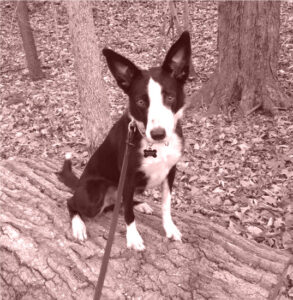
Sike was once a dog that was confined to his home because of his severe fear aggression, he is now anxiety free and able to go on all the adventures he could ever dream of!
There are likely many factors influencing your dog’s current behavior choices, but there is one factor that absolutely must improve if you want your dog’s behavior choices to improve: his relationship with you. This is especially important for a dog who is fearful. Comforting a fearful dog is very different than comforting a fearful person. A fearful dog needs GUIDANCE from you. The only way to effectively comfort your dog is to make all the decisions for him. This requires a bit of a relationship shift for you and your dog because your dog needs to trust and respect you enough to let you make the decisions.
This where behavior training comes into play. Done right, dog training should build a bond of trust and respect between you and your dog. Your dog will learn that he can trust you to make these decisions for him, and you will learn how to step up and make the decisions for your dog so the he doesn’t feel the stress of the situation. This allows your dog to relax. If your dog is relaxed when he was previously freaking out, what does this mean? His state of mind has shifted. He is no longer feeling stressed, anxious, or fearful. Guess what? Neither are you.
Thinking in “big picture” terms, this means your dogs quality of life can improve drastically. Owners of dogs with fear aggression often live within a pattern of avoidance – avoiding anything or any situation that might cause the dog to react. So if the dog reacts to children, for example, any walking route with playgrounds, schools, or neighborhood kids is off limits. Public places are too risky. Even enjoying outdoor activities like hiking is risky. Once the dog is no longer reactive, this massive scale of avoidance can stop and the dog can enjoy more activities with you! He can go for long walks any place, any time, can go on vacation with you, can join you for a nature walk, and so much more.
If you have a dog that is suffering from fear aggression or any other behavior issue please give me a call at 800.649.7297 or email me using my contact form. I CAN help!