
Aggressive behavior is alarming, but don’t write the dog off too quickly.
This past week, I’ve started with two new in-home dog training clients. When I met with the first client, she told me that several dog trainers have proclaimed her dog “beyond help” and that she’s had trouble finding someone who is willing to work with her dog. Her search has been going, off and on, for an entire year.
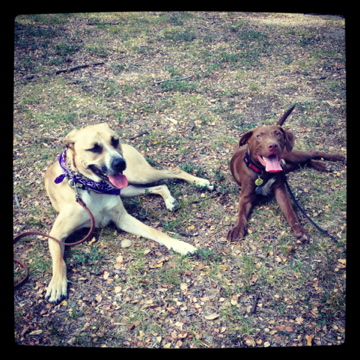
Aggressive dog behavior, whether it’s toward another dog, or toward a human, is alarming.
I was very surprised to hear this, but even more surprised to hear nearly the exact same scenario relayed by the second client (who is completely unrelated to the first). This client told me how she has talked to dozens of dog trainers off and on over the past year, and has been Google searching quite frequently. The dog trainers she talked to either told her that her dogs were beyond help, or that she would have to be extremely aggressive and confrontational in her training methods to make any progress.
There are two common links between these two otherwise unrelated clients. First, they have both been told their dog is beyond help and in both cases, they were told this over the phone, without ever meeting the dog trainer in person. Second, both clients’ dogs suffer from aggression. One has a large, 150-pound dog who is human aggressive, likely from territorial and fear-based reactions. The other has two large 75-pound dogs who suffer from intense dog aggression toward each other.
Why is it that dog trainers are so willing to write off aggressive dogs without ever even meeting them?! This conveys a blatant lack of understanding of how aggressive behaviors often develop, what aggressive behavior represents, and how to overcome aggression through dog training.
The whole reason why I do in-home consultations before making any judgement calls about a particular dog (and certainly before agreeing to begin training) is so I have a chance to observe the dog, see how intense his/her behavior is, talk with the owner, see how the owner and the dog interact, see what the dog’s lifestyle is like, see what the dog’s state of mind is like, etc., etc., etc. Without assessing all of these variables, how can I fairly, much less accurately proclaim a dog beyond help?! (P.S. I don’t think I’ve ever pronounced a dog “beyond help.” Sometimes a situation is unworkable, but I can’t recall a time when the limiting factor was the dog’s ability to make progress.)
I have to wonder how many dogs out there are put down each day, each month, each year, because some dog trainer(s) told the owners that their dog was beyond help. Of those, how many dogs never even met the dog trainer? I’ll tell you one thing, I won’t join the ranks of dog trainers who make judgement calls without meeting the dog. That’s just not fair.
If you know someone who is searching for a dog trainer in DFW, please urge them to contact me. I give each dog a fair and accurate assessment, and then if we decide to work together, I commit to working with each client until their training goals are achieved. If you’re outside the DFW area, visit this link for a list of dog trainers who will do the same.